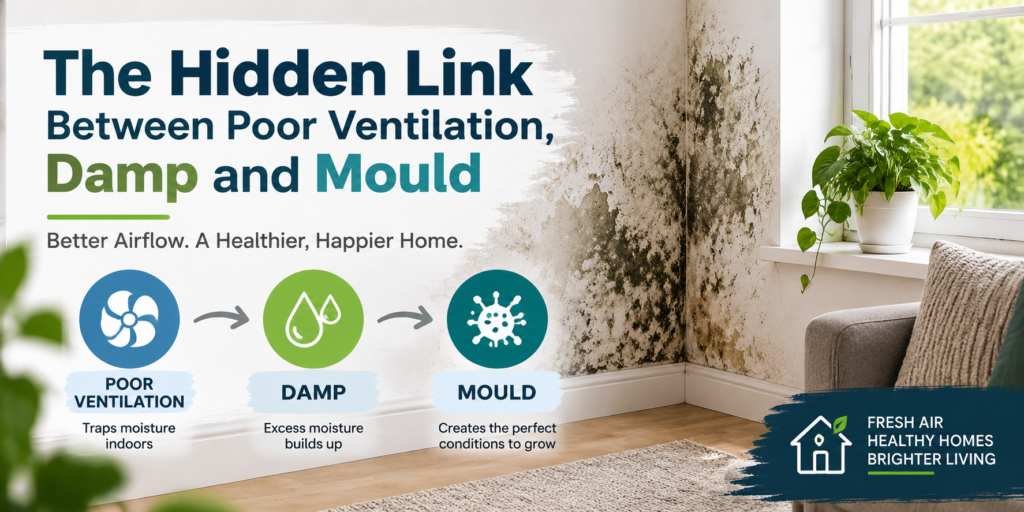
Poor ventilation is one of the biggest hidden causes of moisture problems in homes. When fresh air cannot circulate properly, excess humidity from everyday activities such as cooking, bathing, and drying clothes becomes trapped indoors. Over time, this trapped moisture can lead to damp walls, condensation, and mould growth.
How Poor Ventilation Causes Damp Problems
Poor ventilation prevents moisture from escaping, causing humidity levels to rise inside your home. When warm, moist air comes into contact with cold surfaces such as walls and windows, condensation forms. If this moisture remains for long periods, it can create damp patches and damage paint, plaster, and building materials.
The Connection Between Damp and Mould Growth
Damp conditions create the perfect environment for mould to develop. Mould thrives in areas with high moisture levels and poor airflow, often appearing around corners, ceilings, windows, and cold walls. Understanding the connection between damp and mould can help homeowners take early action before the problem becomes severe.
Improve Ventilation to Prevent Damp and Mould
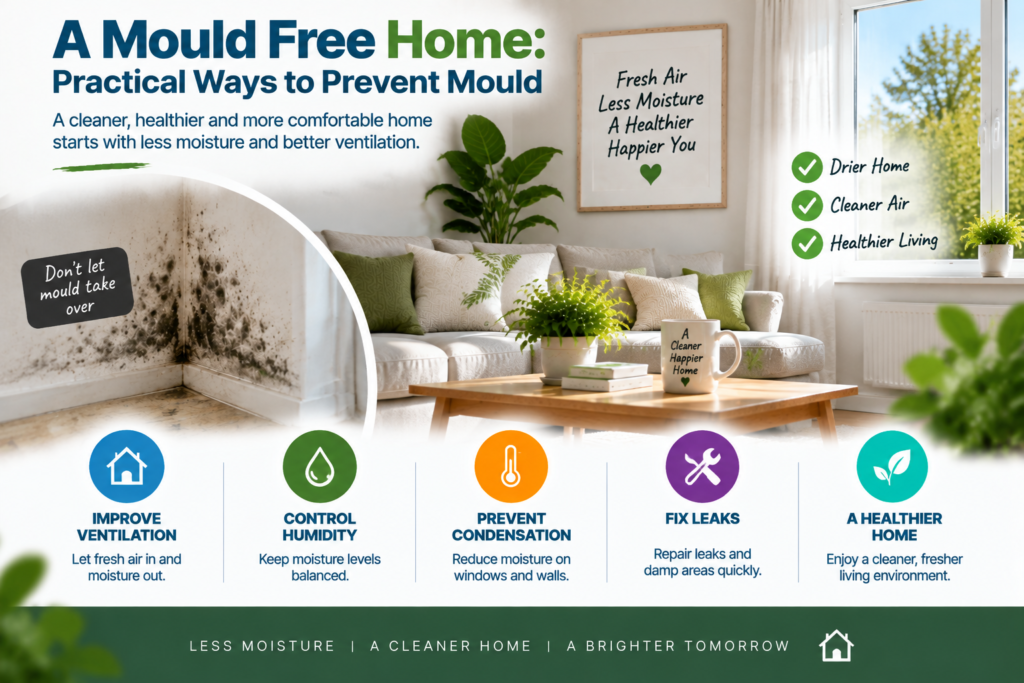
Improving airflow is one of the most effective ways to reduce indoor moisture. Opening windows, using extractor fans, maintaining ventilation systems, and controlling humidity levels can help keep your home fresh and dry. Better ventilation not only protects your property but also creates a healthier living environment.
By understanding the hidden link between poor ventilation, damp and mould, homeowners can prevent moisture buildup, reduce condensation problems, and maintain a cleaner, more comfortable home.