
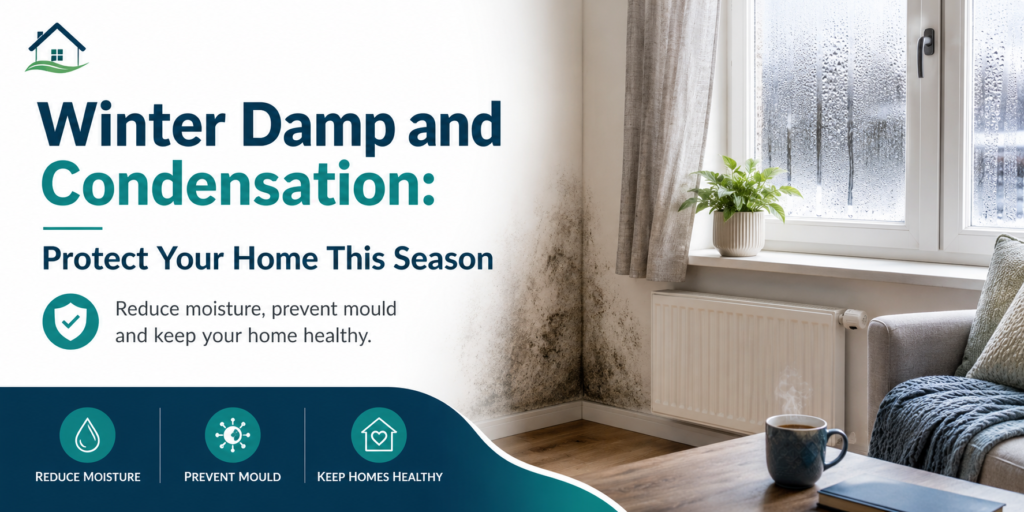
Winter months can increase the risk of damp and condensation problems as colder temperatures, closed windows, and reduced airflow create the perfect conditions for moisture buildup. Understanding how to prevent winter damp and condensation can help protect your home from mould growth, wall damage, and unhealthy indoor air.
Why Winter Causes Damp and Condensation
During winter, warm indoor air meets cold surfaces such as windows, walls, and ceilings, causing moisture to turn into condensation. Everyday activities like cooking, showering, and drying clothes add extra humidity to the air, which can become trapped without proper ventilation.
Warning Signs of Winter Damp Problems
Common signs of winter damp and condensation include:
- Water droplets on windows
- Black mould around corners and window frames
- Damp patches on walls
- Peeling paint or damaged wallpaper
- Musty smells inside rooms
- Cold and wet-feeling surfaces
Recognising these signs early can help prevent more serious moisture damage.
How to Prevent Damp and Condensation in Winter
Keeping your home dry during winter requires good airflow and moisture control. Opening windows regularly, using extractor fans, maintaining steady heating, and reducing excess humidity can help prevent condensation.
Using a dehumidifier, drying clothes properly, checking for leaks, and keeping rooms well ventilated are effective ways to protect your home throughout the colder months.
By taking simple preventative steps, you can reduce winter damp and condensation, prevent mould growth, and create a warmer, healthier, and more comfortable living environment all season long.