rising damp and penetrating damp is important for identifying moisture problems and choosing the right solution. Although both types of damp can damage walls, they occur for different reasons and show different warning signs.
What Is Rising Damp?
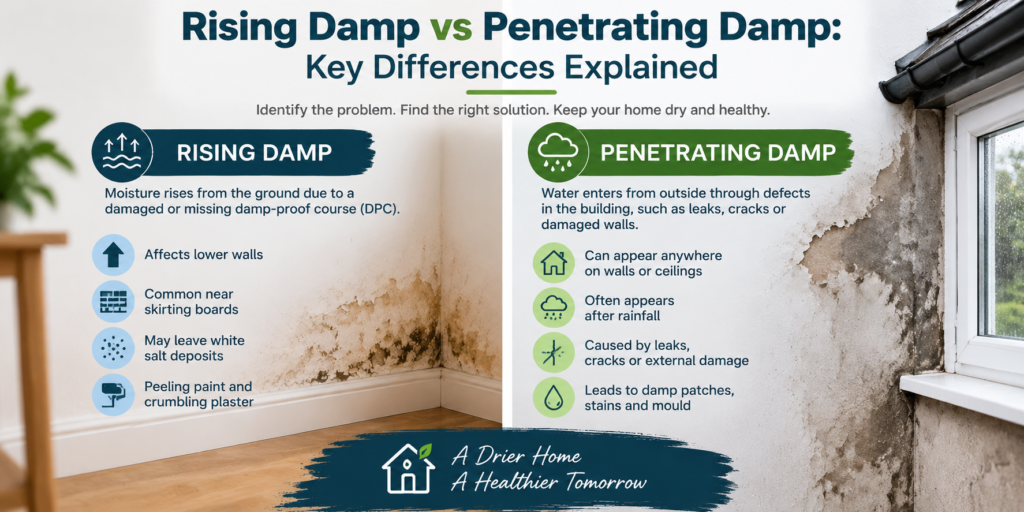
Rising damp occurs when groundwater moves upward through walls due to a damaged or missing damp-proof course (DPC). Moisture travels through porous building materials such as bricks and mortar, often affecting the lower sections of walls.
Common signs of rising damp include:
- Damp patches starting from the floor level
- Peeling paint or damaged wallpaper near skirting boards
- White powdery salt deposits on walls
- Crumbling plaster
- A musty smell in affected areas
What Is Penetrating Damp?
Penetrating damp happens when water enters a property from outside through defects in the building structure. Problems such as leaking roofs, damaged gutters, cracked walls, or faulty windows can allow rainwater to penetrate into internal walls.
Common signs of penetrating damp include:
- Damp patches appearing after rainfall
- Water stains on walls or ceilings
- Localised areas of moisture damage
- Damaged plaster and paint
- Mould growth around affected areas
Key Differences Between Rising Damp and Penetrating Damp
| Rising Damp | Penetrating Damp |
|---|---|
| Moisture rises from the ground | Water enters from outside |
| Usually affects lower walls | Can appear anywhere on walls or ceilings |
| Linked to damp-proof course problems | Caused by leaks, cracks, or external damage |
| Often shows salt deposits | Often shows water stains |
| Requires damp-proofing solutions | Requires repairing the source of water entry |
How to Solve Damp Problems
The correct solution depends on identifying the cause of the damp. Rising damp may require repairing or installing a damp-proof course, while penetrating damp usually requires fixing external issues such as roof leaks, damaged brickwork, or blocked gutters.
Early detection and regular maintenance can help prevent serious damage, mould growth, and expensive repairs. By understanding the key differences between rising damp and penetrating damp, homeowners can protect their property and maintain a healthier living environment.