
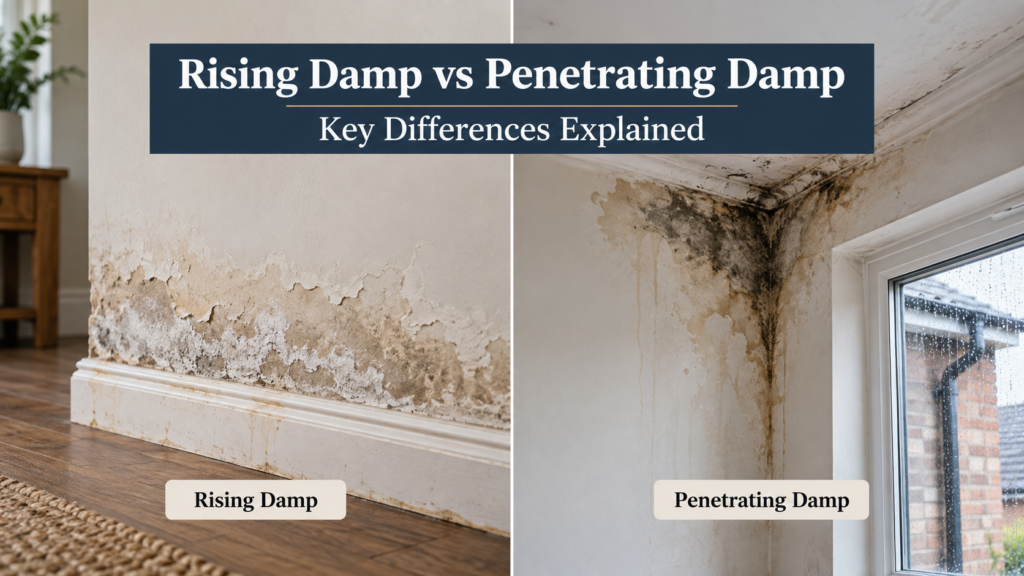
Rising Damp vs Penetrating Damp: Key Differences
Damp is one of the most common problems affecting homes across the UK. However, many homeowners use the word “damp” to describe every moisture issue, even though different types of damp require different solutions.
Two of the most common forms are rising damp and penetrating damp. While both can cause damage to walls, paintwork and the overall condition of a property, their causes and treatments are completely different.
Understanding the difference between rising damp vs penetrating damp can help homeowners identify problems early, choose the right damp treatment and prevent costly repairs in the future.
What Is Rising Damp?
Rising damp is a type of moisture problem where water from the ground moves upwards through the walls of a building. This happens because bricks and mortar are naturally porous, allowing moisture to travel through tiny gaps.
Most modern properties have a damp proof course (DPC), which acts as a protective barrier to stop groundwater from rising into walls. However, if the DPC is missing, damaged or ineffective, moisture can gradually move upwards and create damage.
Rising damp is more commonly found in:
- Older UK properties
- Homes with damaged damp proof courses
- Buildings with poor drainage around foundations
- Properties with ground levels higher than the DPC
Unlike other damp issues, rising damp usually starts from the bottom of walls and gradually moves upwards.
What Are the Common Signs of Rising Damp?
Identifying the early signs of rising damp can help prevent more serious damage.
Damp Patches Near the Bottom of Walls
One of the most common signs is moisture appearing at the lower part of internal walls. In many cases, the damp area can rise up to around one metre above floor level.
Peeling Paint and Wallpaper
As moisture enters the wall, it can cause paint to bubble, crack and peel. Wallpaper may also become loose or damaged.
White Salt Deposits on Walls
Rising damp often brings natural salts from the ground into the wall structure. When the water evaporates, these salts appear as white powdery marks.
Damaged Plaster
Long-term exposure to moisture can weaken plaster, causing crumbling surfaces, cracks and staining.
What Is Penetrating Damp?
Penetrating damp occurs when water enters a property from outside. Unlike rising damp, which moves upwards from the ground, penetrating damp usually travels horizontally through walls, roofs or other external areas.
This type of damp is often caused by problems with the outside structure of a building.
Common causes of penetrating damp include:
- Damaged roof tiles
- Leaking gutters
- Cracked brickwork
- Faulty windows and doors
- Damaged external rendering
- Poor pointing between bricks
Penetrating damp can affect any area of a property and may appear on walls, ceilings or around windows.
What Are the Common Signs of Penetrating Damp?
The signs of penetrating damp often depend on where water is entering the building.
Water Stains on Walls and Ceilings
Dark patches or stains appearing after rainfall can indicate that water is entering through external areas.
Mould Growth
Excess moisture creates ideal conditions for mould. Black mould patches are often a warning sign of ongoing damp problems.
Musty Smells
A damp smell inside a property can indicate trapped moisture within walls, floors or ceilings.
Damaged Internal Finishes
Paint damage, bubbling surfaces and deteriorating plaster can occur when water continues to enter the property.
Rising Damp vs Penetrating Damp: What Is the Difference?
Although rising damp and penetrating damp can appear similar, there are several important differences.
| Difference | Rising Damp | Penetrating Damp |
|---|---|---|
| Source of moisture | Groundwater | External water entry |
| Direction of movement | Moves upwards | Moves horizontally/inwards |
| Common location | Lower walls | Walls, ceilings and around windows |
| Main cause | Failed damp proof course | Roof, wall or gutter problems |
| Typical signs | Salt deposits and peeling paint | Water stains and mould |
| Treatment | DPC repair and moisture control | External repairs and waterproofing |
Understanding these differences is important because applying the wrong treatment may not solve the actual problem.
What Causes Damp Problems in UK Homes?
Many UK homes experience damp issues because of weather conditions, building age and maintenance problems.
Heavy Rainfall and Weather Exposure
The UK’s wet climate means external walls, roofs and drainage systems are regularly exposed to moisture.
Poor Property Maintenance
Blocked gutters, damaged roofs and cracked walls can allow water to enter a building over time.
Age of the Property
Older homes may have outdated damp protection systems or materials that require repair.
Poor Ventilation
While ventilation is mainly linked with condensation, poor airflow can increase moisture levels and contribute to wider damp problems.
How Is Rising Damp Treated?
The correct treatment for rising damp depends on the cause and severity of the issue.
Common rising damp treatment methods include:
Repairing or Installing a Damp Proof Course
If the existing DPC has failed, it may need repair or replacement to prevent further moisture movement.
Removing Damaged Plaster
Plaster affected by salts and moisture may need to be removed before walls can be properly restored.
Allowing Walls to Dry
Walls need sufficient drying time before repainting or applying new finishes.
Professional Damp Inspection
A professional assessment helps confirm whether the issue is rising damp or another moisture problem.
How Is Penetrating Damp Treated?
Treating penetrating damp starts with finding and repairing the source of water entry.
Possible solutions include:
Repairing Roof Problems
Broken tiles, damaged flashing or roof leaks should be repaired to prevent further water penetration.
Fixing Gutters and Drainage
Damaged or blocked gutters can cause rainwater to run down external walls.
Repairing Brickwork
Cracks and damaged pointing can allow water to enter through external walls.
Improving External Protection
Sealing vulnerable areas around windows, doors and walls can help prevent future damp problems.
How Can You Prevent Damp in Your Home?
Preventing damp is easier and more affordable than dealing with major repairs later.
Homeowners can reduce the risk of damp by:
- Checking roofs regularly
- Cleaning gutters and drains
- Repairing cracks in external walls
- Maintaining window seals
- Improving ventilation
- Fixing leaks quickly
- Monitoring early signs of moisture
Regular maintenance plays an important role in protecting your property from damp damage.
Should You Hire a Professional for Damp Repair?
Although some minor maintenance tasks can be completed yourself, identifying the exact cause of damp can be challenging.
A professional damp specialist can:
- Identify the source of moisture
- Recommend the correct damp treatment
- Prevent unnecessary repairs
- Protect your property from future damage
Incorrect treatment can sometimes hide the symptoms without fixing the real problem.
For serious issues such as rising damp, penetrating damp or structural moisture problems, professional advice is often the most effective solution.
Final Thoughts on Rising Damp vs Penetrating Damp
Understanding the difference between rising damp and penetrating damp is essential for protecting your home.
Rising damp is caused by moisture moving upwards from the ground, usually due to problems with damp protection. Penetrating damp happens when water enters from outside through damaged roofs, walls, gutters or windows.
Both problems require the correct diagnosis and treatment. Acting early can prevent further damage and reduce repair costs.