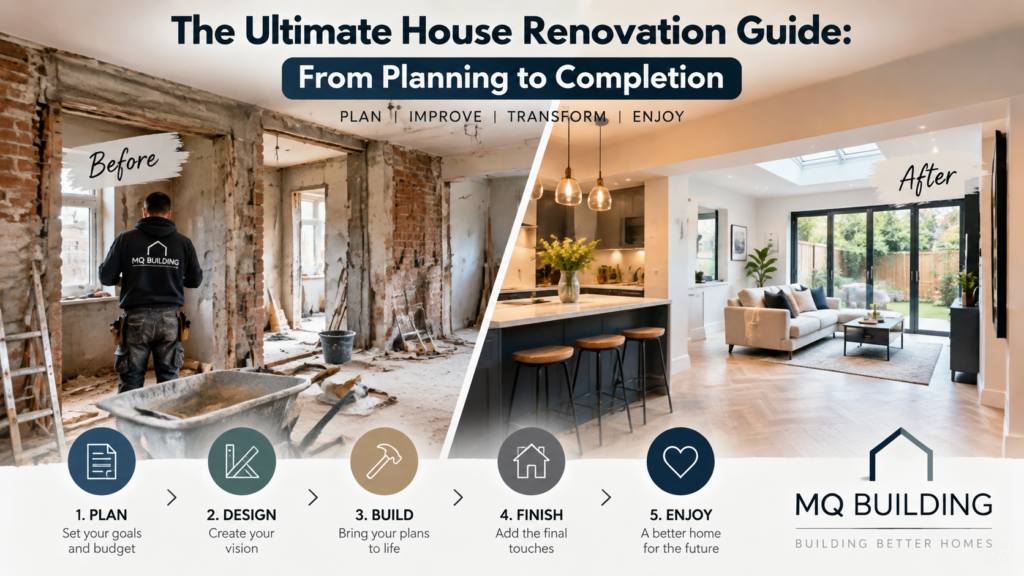

Renovating a house can completely transform the way you live. Whether you have bought an older property that needs modernising or simply want to improve your current home, good planning can save you from costly mistakes, unnecessary delays and stressful surprises.
A house renovation can involve much more than choosing a new kitchen, flooring and paint colours. You may need to consider structural work, damp, electrical systems, plumbing, insulation, planning permission, Building Regulations and the condition of the roof before the exciting finishing work even begins.
That is why having a clear renovation checklist is so important.
This ultimate house renovation checklist for UK homeowners takes you through the key stages from the first property inspection to the final checks before moving back into your renovated home
The Ultimate House Renovation Checklist Starts With Your Goals
Before contacting builders or ordering materials, decide what you actually want the renovation to achieve.
Ask yourself:
- Do we need more living space?
- Is the current layout practical?
- Do we need another bedroom?
- Is the kitchen too small?
- Do we need an additional bathroom?
- Would a home office improve the property?
- Is energy efficiency a priority?
- Are we planning to stay here long term?
- Are we renovating mainly to increase property value?
Separate your ideas into three categories:
Essential work: Repairs and improvements that must be completed.
Important improvements: Changes that will make the property significantly better.
Nice-to-have features: Items that can be removed if the budget becomes tight.
This simple step can prevent you from spending too much on decorative features while important structural work remains unfinished.
1. Arrange a Detailed Property Inspection
Older homes can hide expensive problems.
Before beginning a major renovation, inspect the entire property carefully.
Look for:
- Structural cracks
- Damp
- Mould
- Roof leaks
- Rotten timber
- Damaged windows
- Old wiring
- Leaking pipes
- Drainage problems
- Uneven floors
- Poor insulation
- Damaged brickwork
For larger projects, consider obtaining a professional building survey.
Finding a serious problem before construction begins is usually much easier than discovering it after your new kitchen or flooring has already been installed.
The Ultimate House Renovation Checklist Includes Structural Checks
Structural problems should normally be addressed before cosmetic renovation.
Cracks do not automatically mean a building is structurally unsafe, but significant cracking should be investigated.
Warning signs can include:
- Wide cracks
- Diagonal cracks
- Doors suddenly sticking
- Uneven floors
- Walls appearing to lean
- Cracks above windows or doors
- Gaps between walls and ceilings
If structural alterations are planned, you may also need a structural engineer.
Removing load-bearing walls, creating large openings or changing roof structures can require specialist calculations and structural support.
2. Check the Roof and Exterior
A beautiful interior will not last if water is entering through the roof.
Inspect:
- Roof tiles
- Chimneys
- Flashing
- Gutters
- Fascias
- Soffits
- External walls
- Render
- Brickwork
- Drainpipes
Inside the loft, look for water marks, daylight entering through gaps or damaged timber.
Make the property structurally sound and weatherproof before investing heavily in interior finishes.
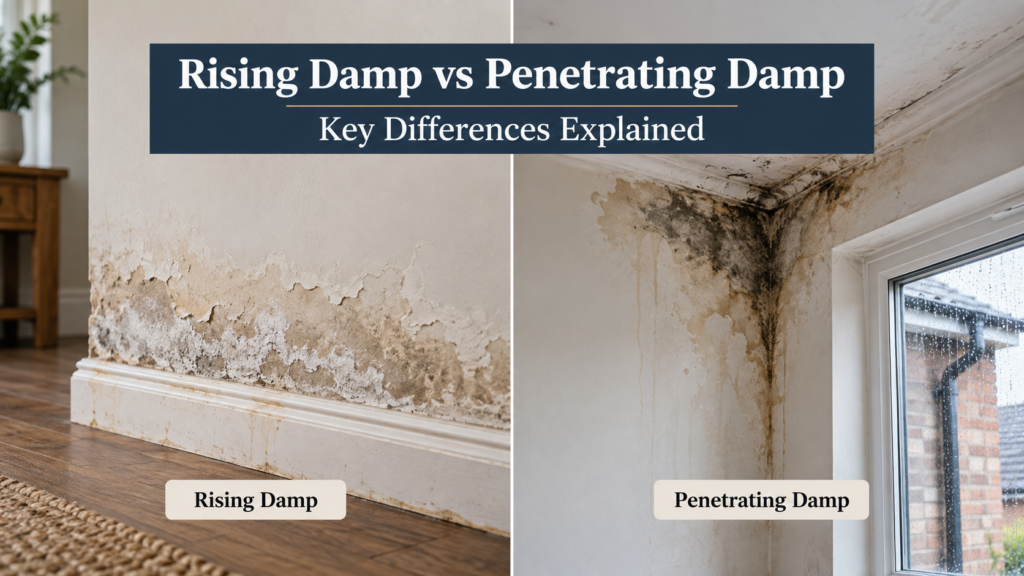
3. Check for Damp Before Renovating
Damp can quickly damage plaster, flooring, timber and decoration.
Common warning signs include:
- Musty smells
- Peeling paint
- Mould
- Wet patches
- Stained walls
- Damaged skirting boards
- Crumbling plaster
The most important step is identifying the source.
The problem could come from a leaking pipe, damaged roof, defective guttering, condensation, poor ventilation or another moisture issue.
Do not simply paint over damp.
Fix the cause first.
UK Homeowners Should Check Planning Permission Early
Not every renovation requires planning permission.
Some improvements and extensions may be possible under permitted development rights, subject to limits and conditions. In England, official guidance confirms that permitted development rights can allow certain improvements or extensions without a full planning application.
However, planning rules become particularly important if you are considering:
- A house extension
- Major external alterations
- Significant roof changes
- Certain loft conversions
- Outbuildings
- Changes to a listed building
- Work within a conservation area
Restrictions can also apply to individual properties.
If you are uncertain, speak to your local planning authority before starting work.
In England, homeowners can also consider applying for a Lawful Development Certificate where appropriate to establish formally that proposed development is lawful.
4. Check Building Regulations Requirements
Planning permission and Building Regulations approval are different.
You may not require planning permission but still need to comply with Building Regulations.
In England, GOV.UK confirms that Building Regulations can apply to extensions and many alterations including certain electrical work, bathroom plumbing, replacement windows and doors and roof-covering work.
Depending on the renovation, requirements may cover:
- Structural safety
- Fire safety
- Electrical safety
- Ventilation
- Drainage
- Insulation
- Energy efficiency
- Windows
- Doors
- Staircases
- Plumbing
Keep all approvals and completion documents safely after the work is finished.
They may become important when you eventually sell the property.
The Ultimate House Renovation Checklist Should Include Neighbours
Major renovation work can affect neighbouring properties.
Speak to your neighbours before disruptive construction starts, particularly if you are planning structural work near a shared wall or boundary.
In England and Wales, certain work can fall under the Party Wall etc. Act 1996.
This can include particular work to an existing party wall, building at a boundary or excavating near neighbouring buildings. Where the Act applies, neighbouring owners need to be formally notified.
Discuss this early rather than waiting until construction is about to begin.
Good communication can also make noise, deliveries, scaffolding and temporary disruption easier for everyone.
5. Create a Realistic Renovation Budget
Your renovation budget should include much more than the price of visible finishes.
Consider costs for:
- Architect or designer fees
- Structural engineer
- Planning applications
- Building control
- Surveys
- Builder
- Electrician
- Plumber
- Roofing
- Windows
- Insulation
- Kitchen
- Bathrooms
- Flooring
- Plastering
- Joinery
- Decorating
- Waste removal
- Landscaping
- Temporary accommodation
Also keep money available for unexpected problems.
Older homes frequently reveal additional work once floors, walls and ceilings are opened.
A contingency fund gives you more flexibility when something unexpected appears.
6. Finalise Your Layout Before Construction
Changing your mind once construction has started can become expensive.
Before work begins, decide:
- Which walls are staying
- Which walls are being removed
- Door locations
- Window positions
- Kitchen layout
- Bathroom layout
- Furniture positions
- Storage
- Heating
- Lighting
- Electrical sockets
Think about how people will actually move through the completed home.
A larger room is not automatically a better room if the layout is awkward.
The Ultimate House Renovation Checklist Includes Electrical Work
Electrical systems deserve particular attention in older properties.
You may need to consider:
- Consumer unit
- Existing wiring
- Plug sockets
- Lighting circuits
- Kitchen appliances
- Bathroom electrics
- Outdoor power
- Smoke alarms
- Internet connections
- USB or charging points
- Electric vehicle charging
In England, electrical safety in dwellings is covered by Part P of the Building Regulations.
Use appropriately qualified professionals and obtain the relevant certification where required.
Plan socket and lighting positions before plastering.
Adding electrical points later can mean cutting into newly finished walls.
7. Inspect Plumbing and Drainage
Old plumbing can become an expensive surprise.
Check:
- Water pressure
- Pipe condition
- Leaks
- Drainage
- Boiler
- Hot-water system
- Radiators
- Bathroom connections
- Kitchen plumbing
If you are changing bathrooms or kitchens, finalise their positions early.
Moving toilets and drainage pipes can be much more complicated than moving furniture or kitchen cupboards.
Where necessary, consider a drainage survey before major building or extension work.
8. Review the Heating System
Renovation is a good opportunity to consider whether the existing heating system still makes sense.
Check:
- Boiler condition
- Radiator locations
- Heating controls
- Pipework
- Thermostats
- Hot-water requirements
If you are increasing the size of the property, make sure the heating system can cope with the additional space.
You may also want to investigate alternative heating technologies depending on your property, budget and long-term plans.
The Ultimate House Renovation Checklist Should Prioritise Energy Efficiency
Renovating provides an opportunity to improve comfort as well as appearance.
Consider:
- Loft insulation
- Wall insulation
- Floor insulation
- Draught proofing
- Better windows
- Improved doors
- Efficient heating
- Smart controls
- LED lighting
- Improved ventilation
However, older properties may require materials and techniques that allow the building to manage moisture appropriately.
Do not assume that every modern insulation system is suitable for every old house.
Professional advice can help avoid creating condensation or moisture problems.
9. Choose the Right Builder
Do not automatically select the cheapest quote.
Compare builders based on:
- Relevant renovation experience
- Previous projects
- Customer references
- Reviews
- Insurance
- Quality of quotation
- Communication
- Availability
- Project management
- Guarantees
Ask for a detailed written quotation.
It should clearly identify what is included and what is excluded.
This makes it much easier to compare quotations properly.
10. Agree on a Written Contract
Major renovation projects should have clear written agreements.
Your contract should address matters such as:
- Scope of work
- Price
- Payment stages
- Start date
- Expected programme
- Materials
- Responsibilities
- Variations
- Delays
- Insurance
- Guarantees
- Defects
- Completion arrangements
Avoid relying on informal conversations for important decisions.
If something changes during construction, document the change and agree on the cost before additional work goes ahead.
The Ultimate House Renovation Checklist Includes a Payment Plan
Do not automatically pay the entire cost upfront.
For substantial construction projects, payments are commonly arranged around agreed stages or progress.
Possible stages could include:
- Deposit or mobilisation
- Structural work
- Roof completion
- First fix
- Plastering
- Second fix
- Practical completion
The appropriate structure depends on your project and contract.
What matters is that both parties understand when payments are due and what work each payment relates to.
11. Order Long Lead-Time Items Early
Some products can take weeks or months to arrive.
Delays to one important item can hold up several other trades.
Consider ordering key items early, including:
- Windows
- External doors
- Kitchen units
- Worktops
- Specialist tiles
- Bathroom fittings
- Bespoke joinery
- Certain appliances
Confirm measurements before placing expensive non-returnable orders.
12. Decide Whether You Can Live in the House During Renovation
Living inside an active renovation can save accommodation costs but can also be stressful.
Think realistically about:
- Dust
- Noise
- Water interruptions
- Electricity interruptions
- Kitchen access
- Bathroom access
- Heating
- Children
- Pets
- Security
For major structural renovations, temporary accommodation may make the project considerably easier.
Discuss the construction sequence with your builder so you know which parts of the home will remain usable.
UK Homeowners Should Plan the Renovation in the Correct Order
Completing work in the wrong order can mean paying twice.
A typical sequence might look something like this:
Stage 1: Investigation and Design
- Survey property
- Confirm budget
- Prepare layout
- Obtain professional advice
- Check approvals
Stage 2: Structural and External Work
- Demolition
- Structural alterations
- Foundations
- Extension work
- Roof repairs
- Windows and external doors
Stage 3: First Fix
- Electrical cables
- Plumbing
- Heating pipes
- Ventilation
- Structural carpentry
Stage 4: Internal Construction
- Insulation
- Plasterboard
- Plastering
- Internal walls
- Ceilings
Stage 5: Second Fix
- Sockets
- Switches
- Lights
- Internal doors
- Skirting
- Sanitaryware
- Radiators
Stage 6: Finishing
- Kitchen
- Flooring
- Decorating
- Joinery
- Final fixtures
Stage 7: External Finishing
- Driveway
- Patio
- Garden
- Fencing
- External lighting
The exact sequence will depend on the property, but planning ahead helps reduce unnecessary rework.
13. Inspect Work Throughout the Renovation
Do not wait until the final day to inspect everything.
Review progress regularly.
Pay attention to:
- Measurements
- Wall positions
- Door openings
- Window positions
- Electrical points
- Plumbing positions
- Tile layouts
- Kitchen installation
- Joinery
- Finishes
Finding a mistake early is normally easier than correcting it after several other trades have completed their work.
14. Keep a Renovation Document Folder
Keep all important renovation information together.
Save:
- Plans
- Drawings
- Quotations
- Contracts
- Invoices
- Receipts
- Planning documents
- Building control documents
- Electrical certificates
- Product warranties
- Appliance information
- Structural calculations
- Guarantees
- Photographs
Digital copies are also worth keeping.
These records can become particularly useful when maintaining or eventually selling the property.
The Ultimate House Renovation Checklist Ends With Final Sign-Off
Do not consider the project complete simply because the builders have packed away their tools.
Walk through every room and create a snagging list.
Check:
- Doors open correctly
- Windows operate correctly
- Lights work
- Sockets work
- Taps work
- Toilets flush
- Showers drain properly
- Heating operates
- Cabinets align
- Paintwork is complete
- Flooring is undamaged
- Sealant is finished
- External areas are complete
Ask for outstanding defects to be resolved.
Where Building Regulations approval was required, make sure you receive the appropriate completion documentation. GOV.UK explains that the building control process includes completion certification where the work complies with the applicable requirements.
The Ultimate House Renovation Checklist for UK Homeowners: Quick Summary
Before renovation:
- Define your goals
- Set your budget
- Arrange a property survey
- Inspect structure and roof
- Check for damp
- Review plumbing and electrics
- Check planning requirements
- Check Building Regulations
- Consider Party Wall requirements
- Finalise your design
Before construction:
- Compare builders
- Check references
- Verify insurance
- Get a detailed quotation
- Sign a written contract
- Agree payment stages
- Create a project programme
- Order long lead-time materials
- Arrange temporary accommodation if required
During construction:
- Monitor progress
- Keep decisions in writing
- Approve additional costs before work
- Check electrical and plumbing positions
- Review finishes before installation
- Keep invoices and certificates
Before completion:
- Create a snagging list
- Test heating and plumbing
- Check doors and windows
- Test electrical fixtures
- Collect guarantees
- Collect relevant certificates
- Obtain required building control completion documentation
- Keep all renovation records safely
Final Thoughts
A successful house renovation rarely happens by accident.
The best projects begin with careful investigation, realistic budgeting and a clear understanding of what needs to happen before construction begins.
Do not rush straight into kitchens, bathrooms and decoration.
Start with the structure, roof, damp, drainage, plumbing and electrical systems. Then deal with planning, Building Regulations, design and construction before moving on to the finishing touches.
Most importantly, leave room in your budget and schedule for the unexpected.
Older homes can reveal surprises once construction begins, but good preparation gives you a much better chance of dealing with them without derailing the entire project.
Use this ultimate house renovation checklist for UK homeowners as your starting point and work through the renovation one stage at a time.
The goal is not simply to make your house look new.
It is to create a safer, more comfortable and better-designed home that works for you for years to come.