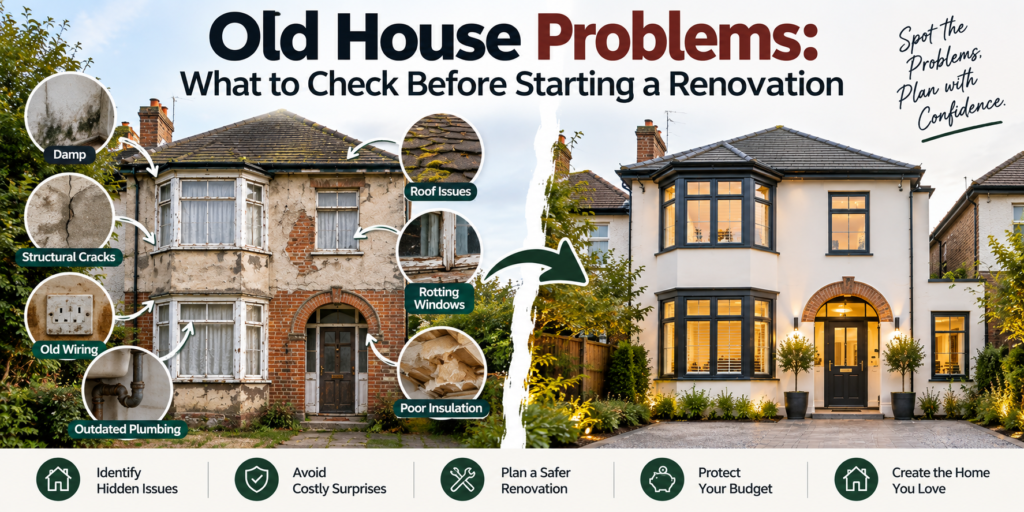
Renovating an older property can be exciting, but it can also reveal problems that are easy to miss during a quick viewing.
Cracks, damp, outdated wiring, leaking roofs and poor insulation may all be hiding beneath tired finishes. If these issues are discovered after renovation work has already started, they can increase costs, delay the project and force you to change your plans.
That is why understanding the most common old house problems before starting a renovation is so important.
A proper inspection can help you decide what needs immediate attention, what can wait and how much money you should realistically set aside.
Old House Problems Often Start With Damp and Moisture
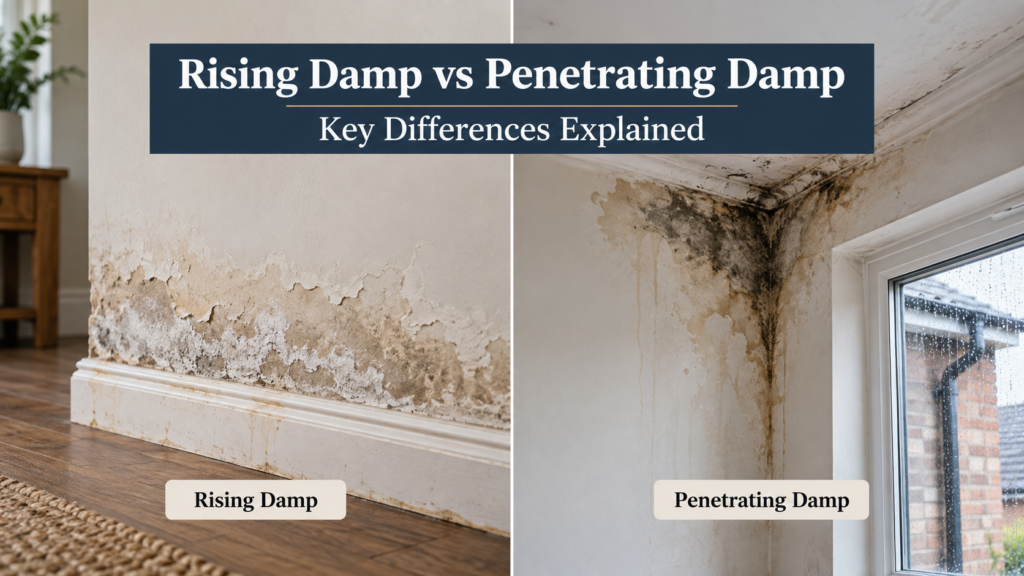
Damp is one of the most common issues found in older properties.
It can appear as:
- Dark patches on walls
- Peeling paint
- Flaking plaster
- Musty smells
- Mould
- Damp skirting boards
- Stained ceilings
The source of moisture can vary.
Possible causes include leaking pipes, damaged gutters, poor drainage, roof leaks, condensation or problems with the building’s original construction.
Do not simply cover damp walls with fresh paint.
The source of the moisture should be identified and repaired first.
Otherwise, the problem may return after the renovation is complete.
What to Check Before Starting a Renovation: Structural Cracks
Not every crack is a serious structural problem, but cracks should never be ignored without understanding their cause.
Small surface cracks in plaster are often cosmetic.
However, wider cracks, diagonal cracks or cracks around doors and windows may require professional investigation.
Look for:
- Large cracks in external walls
- Cracks running diagonally
- Doors that no longer close properly
- Uneven floors
- Walls that appear to lean
- Gaps around windows
- Cracks that continue growing
If you suspect structural movement, ask a qualified structural engineer to inspect the property.
It is better to understand the problem before spending money on plastering, decorating or installing new finishes.
Old House Problems Can Be Hidden in the Roof
A damaged roof can cause serious problems throughout a property.
Water entering through the roof may damage ceilings, insulation, timber and electrical systems.
Inspect the roof for:
- Missing tiles
- Broken tiles
- Damaged flashing
- Sagging sections
- Blocked gutters
- Damaged chimneys
- Water stains in the loft
- Rotting roof timbers
If possible, inspect the loft after heavy rain.
Fresh water marks can make leaks easier to identify.
Roof repairs should normally be completed before major interior renovation begins.
What to Check Before Starting a Renovation: Electrical Wiring
Older homes may still contain electrical systems that are no longer suitable for modern living.
Today’s homes use significantly more electrical equipment than properties did several decades ago.
You may need more sockets, modern circuits and improved safety protection.
Signs that the electrical system may need attention include:
- Old fuse boxes
- Damaged sockets
- Flickering lights
- Frequently tripping circuits
- Limited plug sockets
- Exposed wiring
- Unusual burning smells
Have the electrical system inspected by a qualified electrician before making major decorative improvements.
If rewiring is required, it is usually better to complete it while walls and floors are already open.
Old House Problems Often Include Outdated Plumbing
Plumbing can also create expensive surprises during a renovation.
Older pipework may suffer from corrosion, leaks or poor water pressure.
Check for:
- Leaking pipes
- Water stains
- Low water pressure
- Slow drains
- Rust or corrosion
- Old water tanks
- Unusual pipe noises
- Damp around bathrooms and kitchens
If you are planning a new kitchen or bathroom, inspect the existing plumbing before deciding on the final layout.
Moving drainage and water connections can significantly increase the cost of a renovation.
What to Check Before Starting a Renovation: Drainage
Drainage problems can be difficult to see from inside the house.
Warning signs may include:
- Slow-draining sinks
- Bad smells
- Water collecting outside
- Frequently blocked drains
- Damp near ground-floor walls
Old drainage systems may have cracked, collapsed or become blocked over time.
If you suspect a problem, a professional drainage inspection can help identify the condition of underground pipes.
This is particularly useful before building an extension or making major changes to kitchens and bathrooms.
Old House Problems Can Include Timber Rot
Timber is commonly used in older homes for floors, roofs, stairs and structural elements.
Long-term exposure to moisture can cause timber to rot.
Look for:
- Soft floorboards
- Timber that crumbles when touched
- Dark or discoloured wood
- Musty smells
- Sagging floors
- Damaged roof timbers
The source of moisture should always be fixed before replacing damaged timber.
Otherwise, newly installed materials may eventually suffer the same problem.
What to Check Before Starting a Renovation: Windows and Doors
Older windows and doors may look attractive, but they can also allow heat, noise and moisture into the home.
Check whether they:
- Open and close properly
- Have damaged frames
- Allow noticeable draughts
- Show signs of rot
- Have broken seals
- Let water inside
- Provide adequate security
In some properties, original windows can be repaired rather than replaced.
This may be especially important in period homes where traditional features contribute to the property’s character.
Old House Problems Can Affect Insulation
Many older homes were built before modern insulation standards.
Poor insulation can make rooms difficult to heat and increase energy use.
Common areas to inspect include:
- Loft spaces
- External walls
- Floors
- Roofs
- Windows
- Doors
Improving insulation can make a major difference to comfort.
However, older buildings often need to manage moisture differently from modern properties.
Make sure any insulation solution is suitable for the construction type of the house.
What to Check Before Starting a Renovation: Heating System
An old boiler or inefficient heating system may struggle to heat the renovated property properly.
Check:
- Boiler age and condition
- Radiators
- Pipework
- Thermostats
- Heating controls
- Hot-water system
If you are planning significant renovation work, it may be worth upgrading the heating system at the same time.
This is particularly important if you are adding rooms or changing the layout.
Old House Problems May Be Hidden Beneath Floors
Floors can reveal a surprising number of issues.
You may discover:
- Rotting joists
- Uneven floorboards
- Damp
- Broken tiles
- Poor insulation
- Previous repair work
- Plumbing leaks
Walk through each room and notice whether the floor feels uneven, soft or unstable.
If you are planning to install expensive new flooring, make sure the structure underneath is sound first.
What to Check Before Starting a Renovation: Walls and Plaster
Old plaster can become cracked, loose or damaged over time.
Tap walls gently in several areas.
A hollow sound may indicate plaster that has separated from the wall behind it.
You may also find multiple layers of wallpaper or paint hiding damaged surfaces.
Do not assume every wall only needs decorating.
Some rooms may require extensive preparation before they are ready for a new finish.
Old House Problems Can Include Poor Ventilation
Poor ventilation can contribute to condensation, mould and uncomfortable indoor air.
Check whether kitchens and bathrooms have suitable ventilation.
You may need:
- Extractor fans
- Trickle vents
- Improved airflow
- Better window ventilation
- Mechanical ventilation systems
Ventilation becomes even more important after upgrading insulation and improving airtightness.
A home needs to retain heat while still allowing excess moisture to escape.
What to Check Before Starting a Renovation: Asbestos and Hazardous Materials
Very old properties may contain materials that require specialist assessment before they are disturbed.
Depending on the property’s age and location, potentially hazardous materials may be present in ceilings, insulation, flooring, pipe coverings or other building products.
Do not remove suspicious materials yourself.
If there is any concern, ask a qualified specialist to assess them before demolition or renovation work begins.
Old House Problems Can Be Caused by Previous DIY Work
Not every problem in an old house is caused by age.
Previous owners may have carried out repairs or alterations that were poorly planned.
Look for:
- Uneven walls
- Strange electrical connections
- Poorly installed plumbing
- Unsupported openings
- Mismatched materials
- Badly fitted windows
- Unusual extensions
Previous alterations should be checked carefully, particularly if you cannot find documentation for the work.
What to Check Before Starting a Renovation: Planning and Building Records
Before carrying out major structural changes, find out what work has previously been done to the property.
Useful documents may include:
- Planning approvals
- Building regulation certificates
- Extension plans
- Electrical certificates
- Boiler records
- Structural calculations
- Previous surveys
These records can help you understand how the property has changed over time.
They can also reveal whether previous work was properly approved.
Old House Problems Should Shape Your Renovation Budget
One of the biggest mistakes homeowners make is spending the entire budget on visible improvements.
A beautiful kitchen will not solve a leaking roof.
New flooring will not fix rotten joists.
Luxury paint will not solve damp.
Create your budget in the right order.
Prioritise:
- Structural stability
- Roof and weather protection
- Damp and drainage
- Electrical safety
- Plumbing
- Heating
- Insulation
- Layout improvements
- Kitchens and bathrooms
- Decoration and finishes
This approach helps protect the money you invest in the property.
What to Check Before Starting a Renovation: Get a Professional Survey
A professional building survey can be one of the most useful investments before renovating an older house.
A surveyor may identify problems that are difficult for an untrained homeowner to notice.
Depending on the property, you may also need advice from:
- Structural engineers
- Electricians
- Plumbers
- Roofers
- Damp specialists
- Drainage specialists
- Architects
The cost of professional inspections can be small compared with the expense of discovering serious problems halfway through construction.
Final Thoughts on Old House Problems Before Renovation
Older homes often have enormous potential, but they need careful investigation before renovation begins.
The most important step is to understand the condition of the building before spending heavily on kitchens, bathrooms, flooring and decoration.
Check the structure, roof, damp, plumbing, electrics, drainage, timber, heating and insulation first.
Once the essential problems are understood, you can create a much more realistic renovation plan and budget.
A successful renovation is not only about making an old house look better.
It is about fixing the problems you cannot see first so the improvements you can see will last for years.