

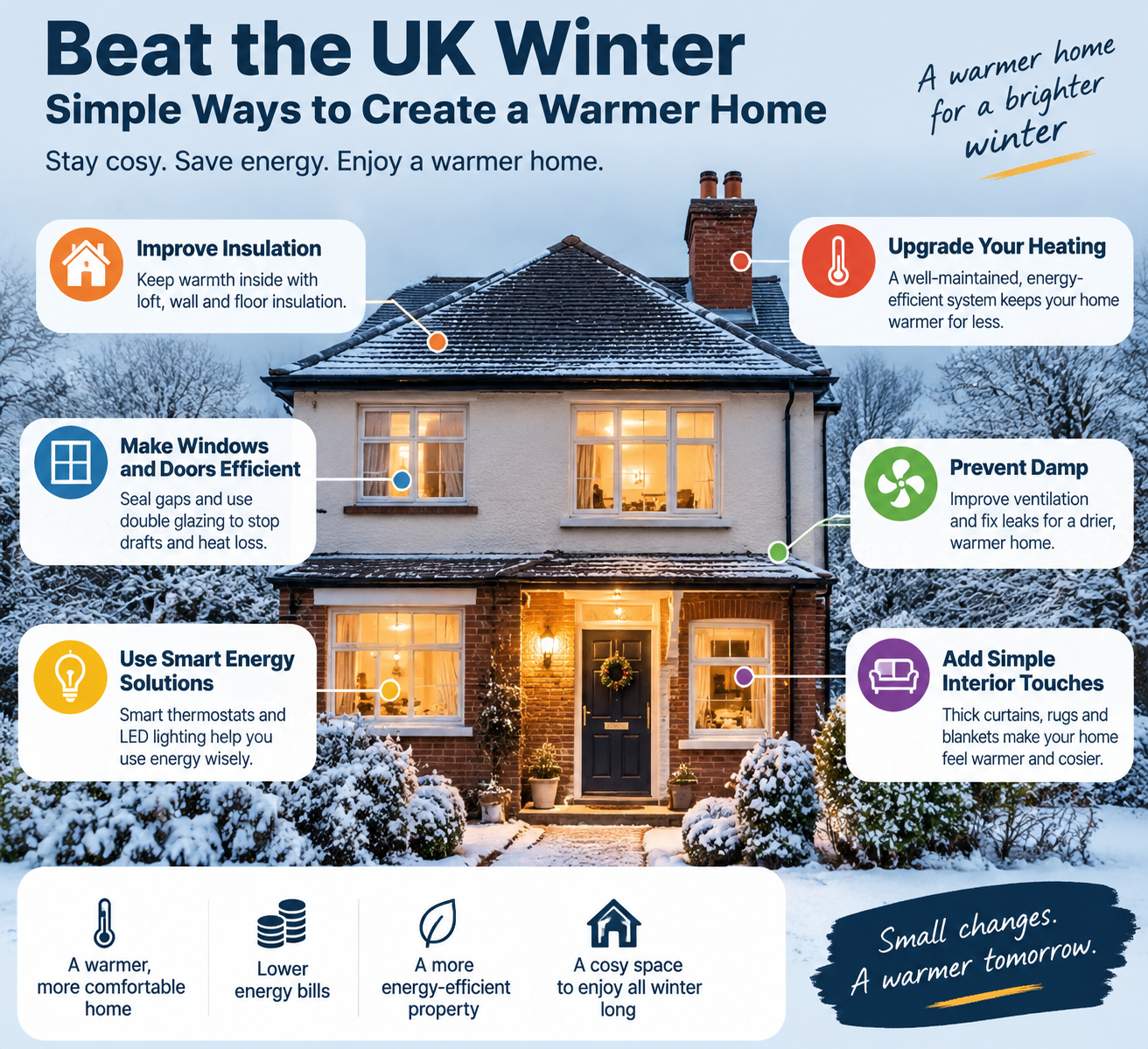
Windows and doors play a major role in maintaining a warm and comfortable home. Poorly sealed frames, old glazing, and small gaps can allow warm air to escape while letting cold air enter. By improving window and door insulation, homeowners can reduce heat loss, improve energy efficiency, and create a more comfortable indoor environment throughout the year.
How Windows and Doors Cause Heat Loss
Windows and doors are some of the most common areas where heat escapes from a property. When seals become damaged or insulation is poor, warm air can easily move outside and cold drafts can enter. This makes heating systems work harder and can increase energy costs while reducing indoor comfort.
Drafty Windows Allow Warm Air to Escape
Old or poorly fitted windows often create small gaps that allow heat to escape. Single glazing and worn-out seals provide less protection against cold weather, making rooms feel colder during winter. Improving window insulation, repairing seals, or upgrading to modern glazing can help keep warmth inside your home.
Improve Energy Efficiency with Better Window Insulation
Energy-efficient windows help create a stronger barrier between your home and the outside environment. Double glazing, insulated frames, and quality window seals reduce heat transfer and help maintain a stable indoor temperature. These improvements can lower energy consumption and make your home more efficient.
Doors Can Be a Major Source of Cold Drafts
Doors are another common area where unwanted heat loss occurs, especially around frames and gaps underneath. Cold air can enter through poorly sealed doors, making rooms uncomfortable and increasing heating demands. Adding weather strips, door seals, or upgrading older doors can significantly improve warmth.
Reduce Heating Costs by Preventing Heat Escape
When heat escapes through windows and doors, your heating system has to work harder to maintain a comfortable temperature. By reducing drafts and improving insulation, your home can retain warmth for longer periods. This helps lower energy usage and can lead to reduced heating expenses over time.
Simple Upgrades That Make a Big Difference
Many improvements to windows and doors are simple and affordable compared with major renovation projects. Adding curtains, sealing gaps, installing draft-proofing materials, and improving insulation can quickly enhance comfort. Small changes can prevent heat loss and make your home feel warmer.
Create a Warmer and More Comfortable Home
Stopping heat loss through windows and doors is an important step toward creating an energy-efficient home. By improving insulation, reducing drafts, and upgrading weak areas, homeowners can enjoy better comfort while using less energy. A well-protected home stays warmer, costs less to heat, and provides a more pleasant living environment.



Join The Discussion