Condensation at home is a common problem that affects many properties, especially during colder months. It occurs when warm, moisture-filled air comes into contact with cold surfaces such as windows, walls, and ceilings. Understanding the causes, warning signs and solutions of condensation at home can help prevent dampness, mould growth, and damage to your property.
Causes of Condensation at Home
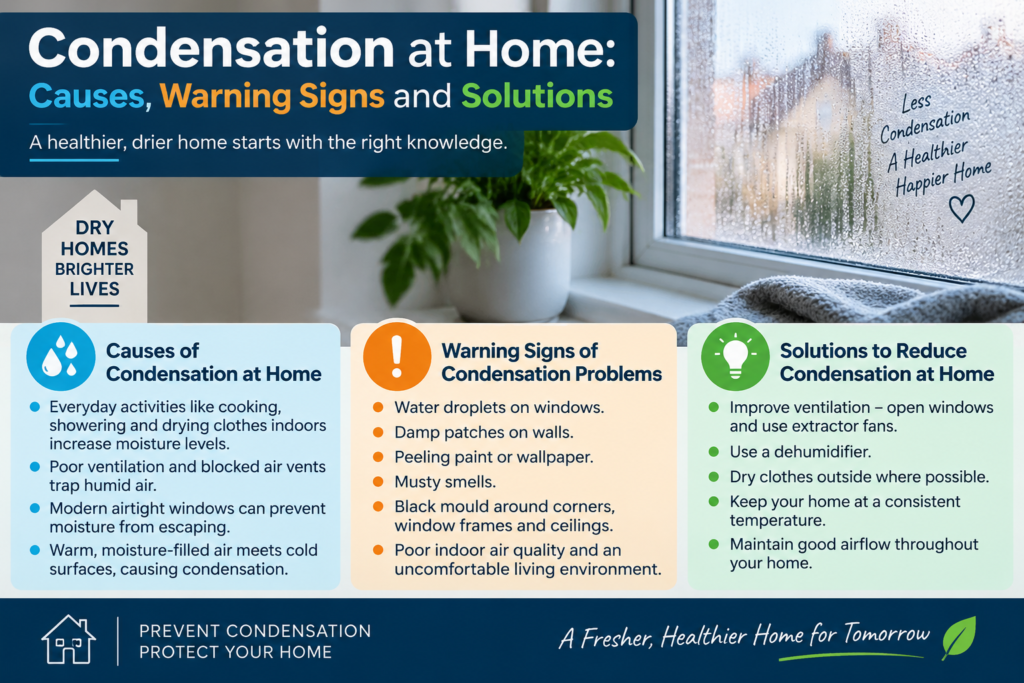
The main causes of condensation at home are linked to excess moisture and poor airflow. Everyday activities such as cooking, showering, drying clothes indoors, and using heating systems can increase humidity levels. When there is not enough ventilation to remove this moisture, it collects on colder surfaces and creates condensation.
Poor ventilation, blocked air vents, and modern airtight windows can also contribute to condensation problems by trapping humid air inside your home.
Warning Signs of Condensation Problems
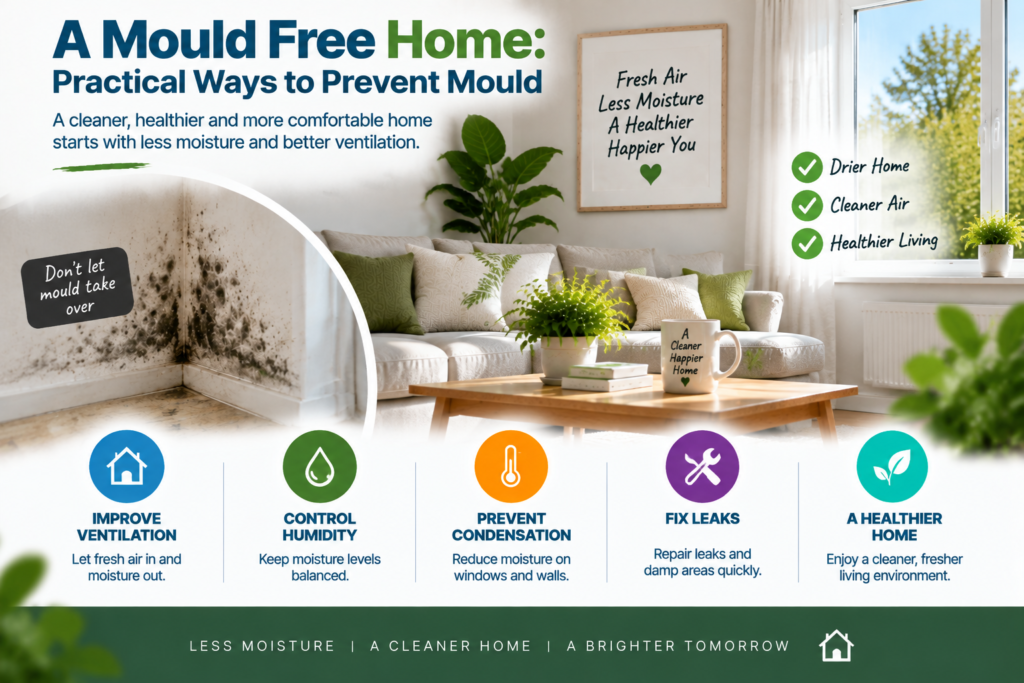
Recognising the warning signs of condensation at home early can help you take action before the issue becomes serious. Common signs include water droplets on windows, damp patches on walls, peeling paint, musty smells, and the appearance of black mould around corners, window frames, and ceilings.
Persistent condensation can affect indoor air quality and may create an uncomfortable living environment if left untreated.
Solutions to Reduce Condensation at Home
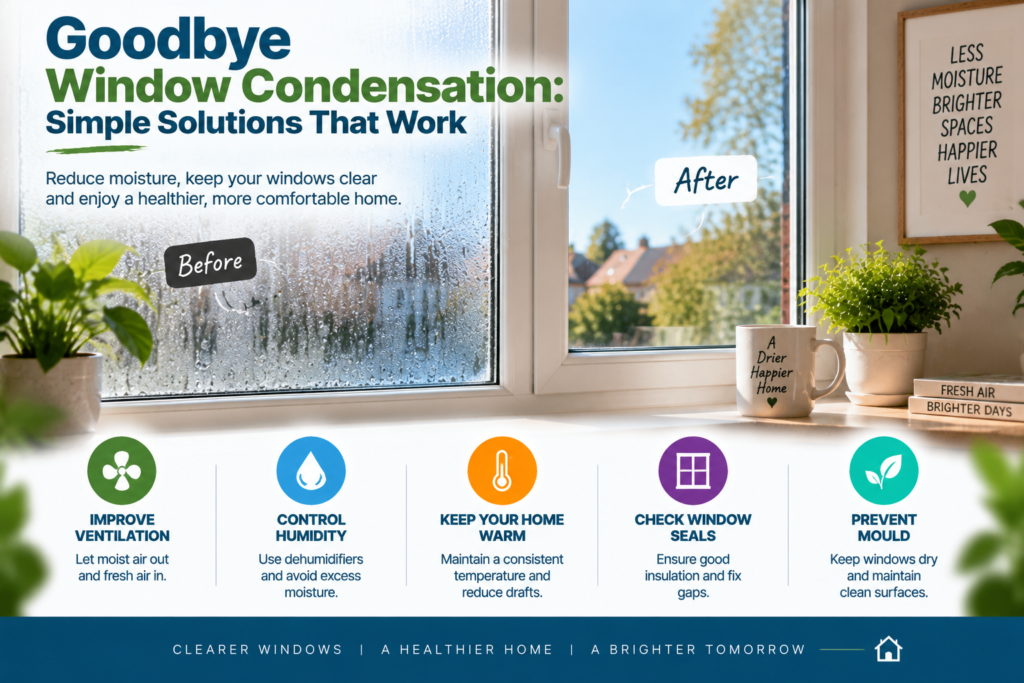
Finding effective solutions for condensation at home starts with improving ventilation and controlling moisture levels. Opening windows regularly, using extractor fans in kitchens and bathrooms, and maintaining good airflow can significantly reduce excess humidity.
Using a dehumidifier, drying clothes outside where possible, and keeping your home at a consistent temperature can also help prevent condensation from building up.
Prevent Condensation and Protect Your Home
Preventing condensation at home requires a balance between heating, ventilation, and moisture control. A well-ventilated property allows fresh air to circulate while removing excess moisture, helping to protect walls, windows, and furniture from damp-related damage.
By understanding the causes, warning signs and solutions for condensation at home, homeowners can create a healthier, fresher, and more comfortable living space while reducing the risk of mould and damp problems.