
Keeping your home warm during colder months is not only about using your heating system more often. Many homes lose heat through hidden areas such as walls, roofs, windows, doors, and floors, making heating systems work harder than necessary. Understanding where heat escapes from your home can help you make effective improvements, reduce energy waste, and create a more comfortable living environment.
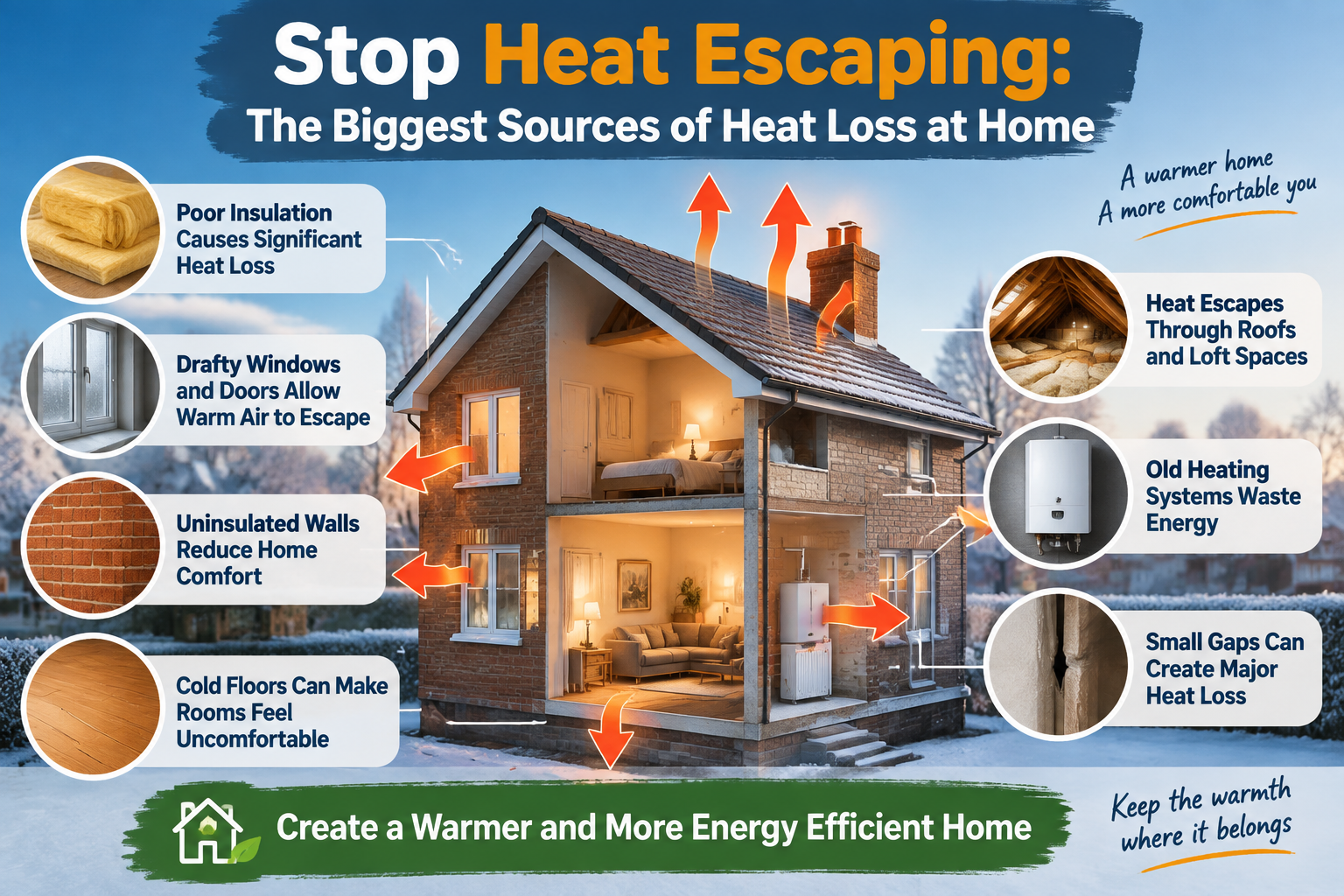
Poor Insulation Causes Significant Heat Loss
Insufficient insulation is one of the biggest reasons homes struggle to stay warm. Without proper insulation in walls, lofts, and floors, heat can easily escape outside, leaving rooms colder and increasing energy costs. Improving insulation helps retain warmth inside your property and allows your heating system to work more efficiently.
Heat Escapes Through Roofs and Loft Spaces
Since warm air naturally rises, the roof and loft area are common places where heat is lost. Homes with outdated or missing loft insulation can lose a large amount of warmth through the top of the building. Adding suitable insulation materials can prevent heat from escaping and help maintain a warmer indoor temperature.
Drafty Windows and Doors Allow Warm Air to Escape
Windows and doors are major sources of heat loss, especially in older properties with poor seals or single glazing. Small gaps around frames can allow cold air to enter while letting warm air escape, making your home feel uncomfortable. Upgrading windows, improving seals, and adding draft protection can significantly improve heat retention.
Uninsulated Walls Reduce Home Comfort
Walls play an important role in keeping your home warm, but poorly insulated walls can allow heat to transfer outside. This is especially common in older houses where insulation standards were lower. Adding cavity wall insulation or other insulation solutions can help reduce heat loss and improve indoor comfort.
Cold Floors Can Make Rooms Feel Uncomfortable
Floors are another area where heat can escape, particularly in homes with gaps, older floorboards, or limited insulation. Cold air entering from below can make living spaces feel colder even when the heating is running. Floor insulation and sealing gaps can help maintain a more consistent and comfortable temperature.
Old Heating Systems Waste Energy
An inefficient heating system may consume more energy while providing less warmth. Older boilers, radiators, and heating equipment can struggle to heat your home effectively. Regular maintenance and upgrading to modern energy-efficient systems can improve performance and help lower heating costs.
Small Gaps Can Create Major Heat Loss
Tiny cracks and openings around pipes, vents, chimneys, and building joints may seem insignificant but can contribute to heat loss over time. These areas allow warm air to escape and cold air to enter your home. Sealing these gaps is a simple way to improve energy efficiency and keep your home warmer.
Create a Warmer and More Energy Efficient Home
Reducing heat loss is one of the most effective ways to create a comfortable and energy-efficient home. By improving insulation, upgrading windows and doors, maintaining heating systems, and fixing small leaks, homeowners can keep more warmth inside while reducing unnecessary energy costs. A well-protected home stays warmer for longer and provides better comfort throughout the year.



Join The Discussion