

Older homes often have unique ventilation challenges due to traditional building methods, ageing materials, and limited airflow systems. While these properties can offer character and charm, they may also experience issues such as stale air, condensation, dampness, and poor indoor air quality. Improving ventilation in older homes helps create a healthier, fresher, and more comfortable living environment.
Why Older Homes and Ventilation Need Special Attention
Older homes and ventilation often require a balanced approach because many traditional properties were not designed with modern airflow systems. Limited ventilation can trap moisture, pollutants, and stale air inside the home. Improving airflow helps protect the building structure while making indoor spaces healthier and more comfortable.
Improve Airflow in Older Homes Without Losing Warmth
Many homeowners worry that increasing ventilation will make an older property colder. However, the right solutions can provide better airflow in older homes while reducing unnecessary heat loss. Using controlled ventilation methods, improving insulation, and sealing unwanted drafts can help maintain comfort and energy efficiency.
Reduce Damp and Condensation Problems in Older Homes
One of the biggest challenges with older homes and ventilation is managing excess moisture. Poor airflow can lead to condensation on windows, damp patches, and mould growth. Installing extractor fans, improving air circulation, and allowing moisture to escape can help prevent these common problems.
Upgrade Ventilation Systems for Better Indoor Air Quality
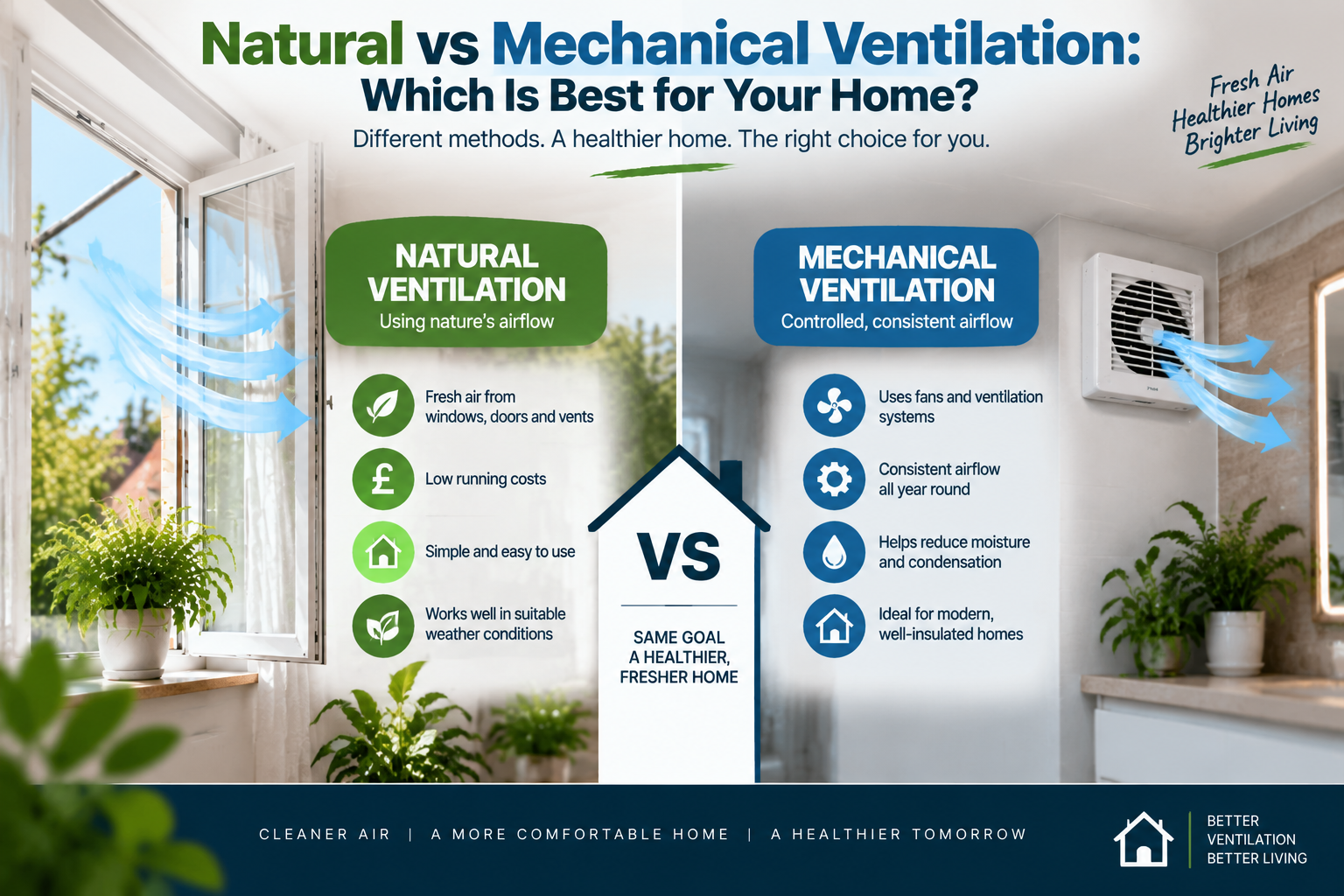
Modern ventilation solutions can significantly improve the performance of older properties. Options such as mechanical ventilation, trickle vents, and improved extractor systems help remove stale air while bringing fresh air inside. These upgrades support cleaner indoor air and create a healthier home environment.
Balance Insulation and Ventilation in Older Homes
Improving insulation is important for older homes, but it should always be combined with proper ventilation. A well-insulated home with poor airflow can trap moisture and reduce air quality. Creating the right balance between insulation and ventilation helps maintain warmth while keeping the property fresh and dry.
Practical Ways to Improve Airflow in Older Homes
Simple improvements can make a noticeable difference to ventilation in older properties. Regularly opening windows, keeping air vents clear, using extractor fans, and improving room circulation are effective steps. These practical solutions help your home breathe better without requiring major renovations.
Create a Healthier Home with Better Ventilation
Improving older homes and ventilation systems can transform indoor comfort and air quality. By controlling moisture, increasing fresh air circulation, and reducing heat loss, homeowners can protect their property while creating a more pleasant living space. Better ventilation helps older homes remain comfortable, efficient, and healthier for modern living.



Join The Discussion