
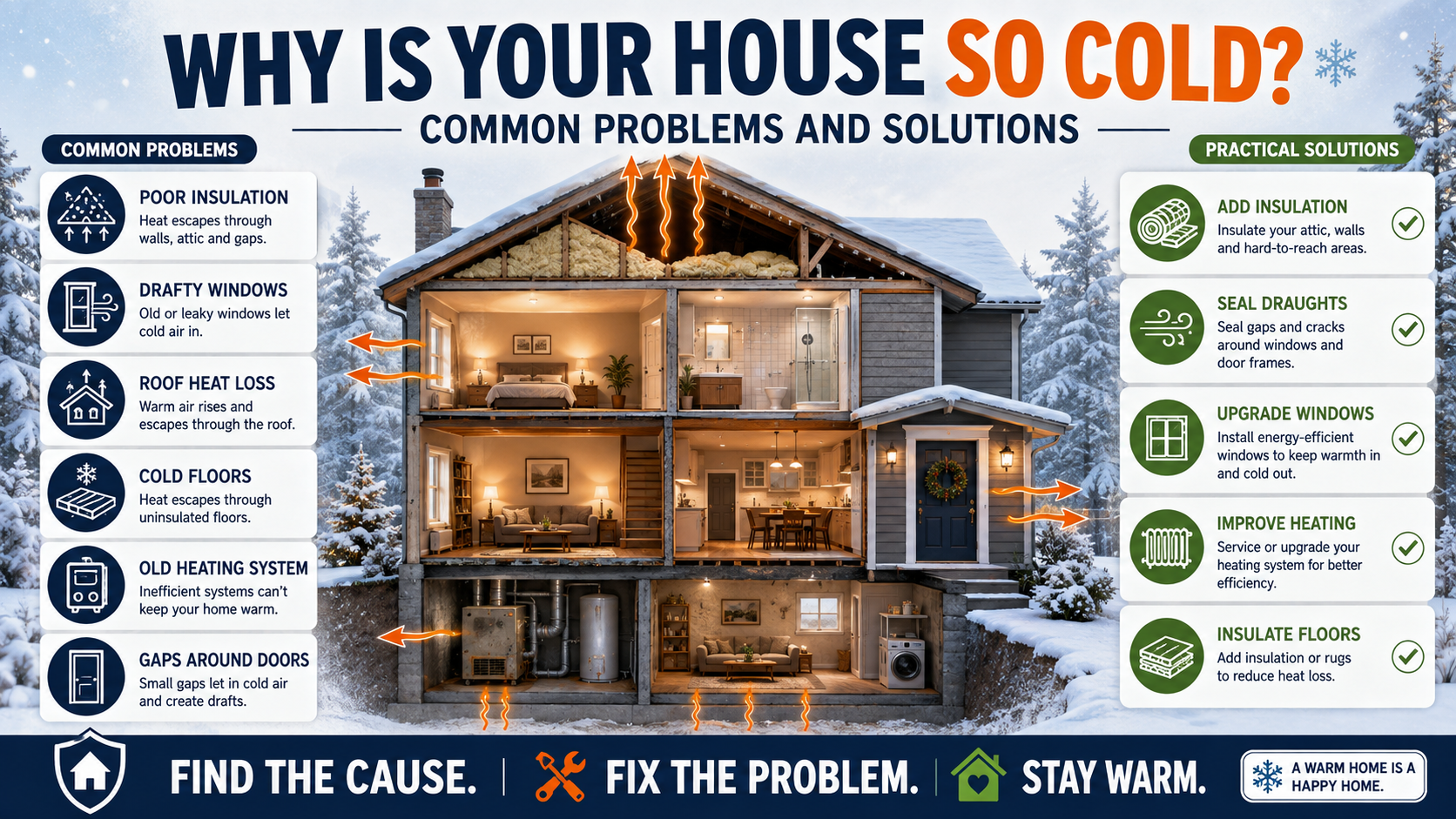
A cold home can make winter uncomfortable and increase your energy bills, even when your heating system is running. Many homeowners experience cold rooms because of hidden issues such as poor insulation, drafts, inefficient heating systems, and heat escaping through weak areas of the property. Identifying the cause of heat loss is the first step toward creating a warmer and more comfortable home.
Poor Insulation Allows Heat to Escape
One of the most common reasons a house feels cold is inadequate insulation. Without proper insulation in walls, roofs, and loft spaces, warm air can escape quickly, making it difficult to maintain a comfortable indoor temperature. Improving insulation helps trap heat inside your home and reduces the workload on your heating system.
Drafty Windows and Doors Let Cold Air Inside
Gaps around windows and doors can allow cold air to enter while warm air escapes. Old frames, damaged seals, and poor installation can create uncomfortable drafts throughout your home. Sealing gaps, upgrading windows, and improving door insulation can help prevent heat loss and make rooms feel warmer.
Heat Loss Through the Roof
Since warm air rises, the roof is one of the biggest areas where heat can escape. A poorly insulated loft or attic allows valuable warmth to leave your home quickly. Adding loft insulation creates a protective barrier that keeps heat inside and improves overall energy efficiency.
Cold Floors Reduce Indoor Comfort
Cold floors can make a home feel uncomfortable, especially during colder months. Poorly insulated floors allow heat to escape and cold air to enter from below. Installing floor insulation, sealing gaps, and using suitable floor coverings can help improve warmth and comfort.
An Inefficient Heating System
Sometimes the reason your house feels cold is an outdated or inefficient heating system. Older boilers, radiators, and heating equipment may struggle to provide consistent warmth while using more energy. Regular maintenance or upgrading to a modern heating solution can improve performance and reduce energy waste.
Small Gaps Create Big Heat Loss Problems
Tiny cracks and gaps around pipes, vents, walls, and building joints can have a major impact on indoor temperature. These small openings allow warm air to escape and cold air to enter without being noticed. Draft-proofing and sealing these areas can make a noticeable improvement in home comfort.
Improve Your Home’s Warmth with Simple Solutions
Making your home warmer does not always require major renovations. Simple improvements such as adding insulation, sealing drafts, upgrading windows, and maintaining your heating system can significantly reduce heat loss. These practical solutions help create a more comfortable, energy-efficient home while lowering unnecessary heating costs.
Create a Warmer and More Efficient Home
Understanding why your house feels cold allows you to choose the right solutions and improve your home’s performance. By addressing insulation problems, reducing drafts, and improving heating efficiency, you can keep more warmth inside and enjoy a comfortable living space throughout the year. A warmer home is not only more pleasant but also more affordable and energy efficient.



Join The Discussion